MRI Abdomen
MRI Upper Abdomen
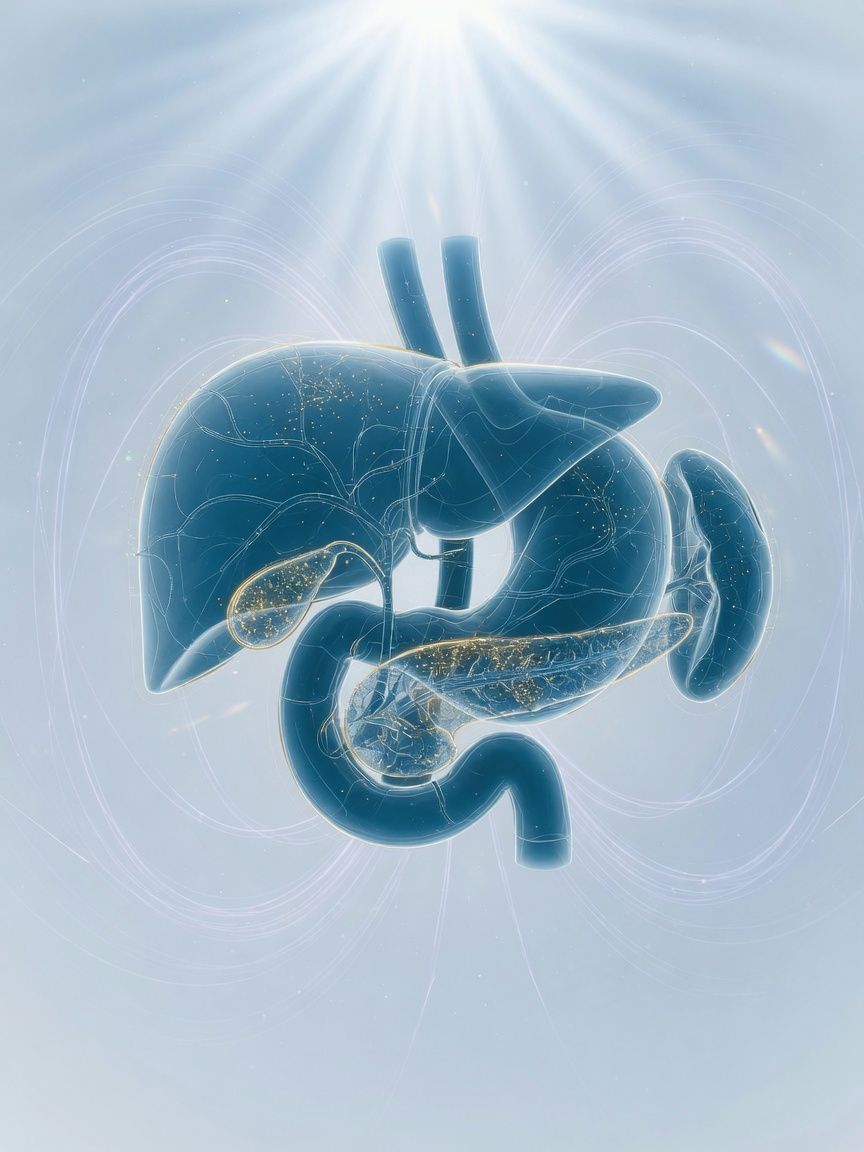
Incidental findings, follow-up examinations: MRI of the upper abdomen covers the liver, pancreas, spleen, kidneys, and adrenal glands in a single session – without X-ray radiation.
Top- Examination time (min)
- 25–35
- Report turnaround (days)
- 1–3
Who it is for
TopFor patients with unclear findings on ultrasound or CT of the upper abdomen, persistent upper abdominal symptoms, or an incidental finding in the liver, pancreas, spleen, kidneys, or adrenal glands – MRI Upper Abdomen in Frankfurt as an overview examination of the organs below the diaphragm.
When
- Incidentally discovered adrenal nodule ("incidentaloma") that is to be classified as a benign adenoma
- Unclear finding in the liver, spleen, pancreas, or kidneys on ultrasound when several organs are to be assessed together
- Chronic, unexplained upper abdominal pain after unremarkable gastroscopy and ultrasound
- Follow-up of known upper abdominal findings without further radiation exposure
- Staging or follow-up of cancer when the upper abdominal organs are the main focus
When not
- Acute, severe abdominal pain with fever, guarding, or vomiting: emergency department
- Gastric or duodenal ulcers and mucosal changes: gastroscopy is the appropriate method for this
- Implant that is not MRI-compatible (e.g., pacemaker)
What the images show
Top- T2 with and without fat suppression in breath-hold or respiratory-triggered technique: cysts, fluid, organ contours
- In-phase and opposed-phase T1 (chemical shift): fat content in adrenal nodules and the liver – a typical feature of benign adrenal adenomas
- Diffusion-weighted imaging: highly cellular lesions in all upper abdominal organs
- Dynamic contrast series when a lesion needs to be characterized more precisely
Course
TopArrival
Registration, prior ultrasound or CT reports, kidney function values if contrast administration is planned.
Briefing
Repeated breath-holding for about 15–20 seconds each; if needed, contrast agent and an antispasmodic medication to reduce bowel movement.
Positioning
Supine position, body coil over the upper abdomen, arms above the head or alongside the body.
Examination
Usually about 25–35 minutes.
Conversation
After the examination, we explain the images and initial results to you.
Written report
Written report with assessment of the individual organs, usually after 1–3 days.
Time at the practice
Approximately 1 hour.
Preparation
Top- Do not eat for about 4 hours before the examination; water and unsweetened tea are allowed
- Take your usual medications with a little water
- Practice holding your breath beforehand
Report
TopOverview of the liver, gallbladder and bile ducts, pancreas, spleen, kidneys, and adrenal glands, lesions with size and signal characteristics, lymph nodes, free fluid, recommendation for follow-up or further diagnostics.
Reported by Dr. Christopher Behrens or Dr. Manuel Schloß.
Limit
Top- An overview examination of the upper abdomen does not replace the specialized protocols for the liver, bile ducts, or pancreas when a question about a specific organ is the main focus.
- Incidental findings, such as small cysts, are common and usually harmless, but may lead to follow-up examinations.
Sources
Top- GuidelineFassnacht M et al., ESE/ENSAT. European Society of Endocrinology clinical practice guidelines on the management of adrenal incidentalomas. Eur J Endocrinol 2023;189:G1-G42. 2023.
- GuidelineEuropean Association for the Study of the Liver (EASL). EASL Clinical Practice Guidelines on the management of benign liver tumours. J Hepatol 2016;65:386-398. 2016.
Questions
Top- How long does it take?
- Usually 25–35 minutes, with breathing commands.
- When does the report arrive?
- The complete written report is usually available within 1–3 business days.
Appointment
TopWhat to bring
- Ultrasound and CT reports
- Laboratory results
- List of medications
- Implant card