Abdomen
MRI Abdomen
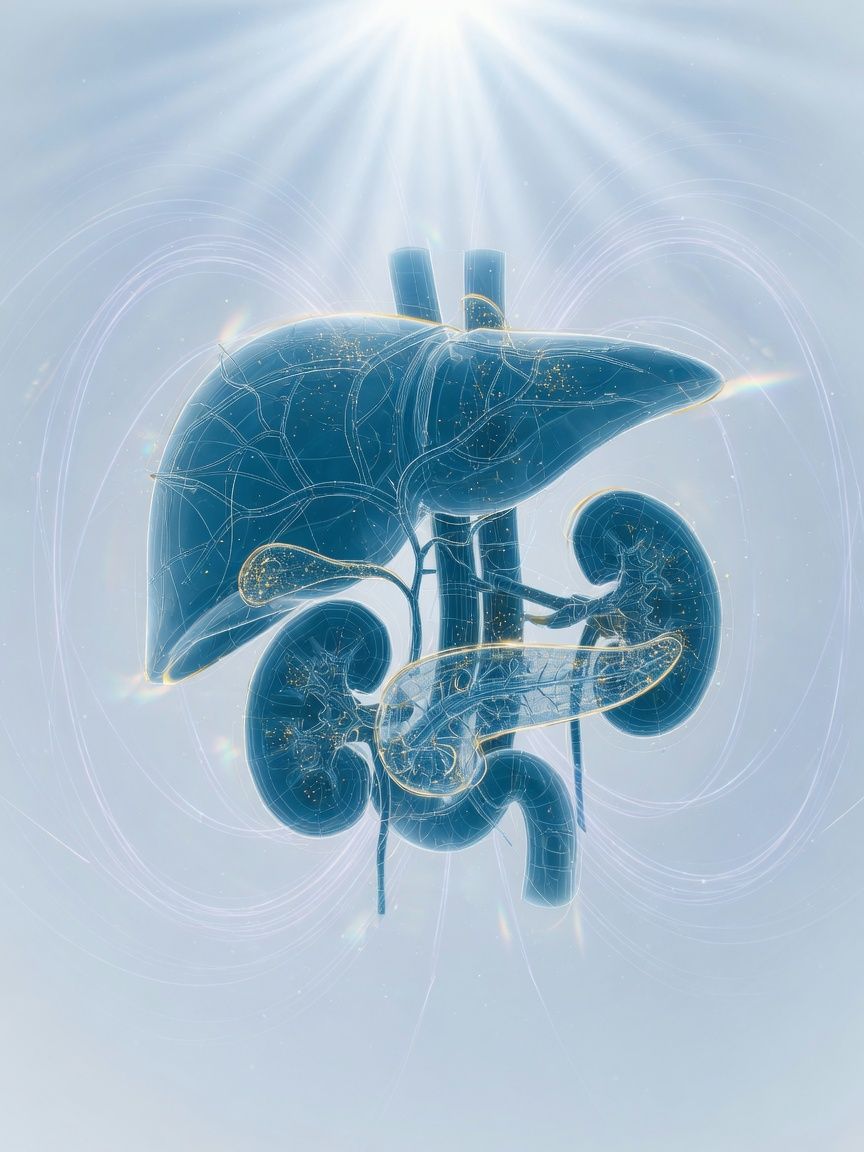
Liver, bile ducts, pancreas, kidneys, and adrenal glands in detail, plus the lymph node status – without radiation. Abdominal MRI clarifies inflammatory and tumorous diseases as well as obstructions of bile and urinary flow.
Top- Examination time (min)
- 25–40
- Report turnaround (days)
- 1–3
Who it is for
TopFor patients with unclear findings in the liver, bile ducts, pancreas, kidneys, or adrenal glands, with suspected biliary or urinary obstruction, inflammatory bowel changes, or enlarged lymph nodes – MRI Abdomen in Frankfurt.
When
- Suspected mass/tumor of the abdominal organs.
- Suspected urinary or biliary obstruction, or inflammatory changes of the gallbladder
- Suspected enlarged lymph nodes or inflammatory bowel changes
When not
- Acute abdomen with the question of perforation or free air in the abdominal cavity
- Kidney stones as the primary question – CT or ultrasound is used for this
- Suspected tumor of the prostate
What the images show
Top- T2 and MRCP for fluid and ducts
- Dynamic liver series only when a focal lesion is in question
- Diffusion-weighted imaging as an addition for tumors, not as the sole basis for interpretation
Course
TopArrival
Registration; laboratory values for kidney function only if contrast agent is used.
Briefing
Breathing instructions; Buscopan only if a duct imaging protocol requires it and there is no contraindication.
Positioning
Supine position, body coil.
Examination
Usually about 25–40 minutes; MRCP and dynamic liver imaging take somewhat longer
Conversation
The images are presented to you after the examination, and the findings are discussed calmly with you.
Written report
Written report usually 1–3 days after the examination.
Time at the practice
Standard, plus an IV line if needed.
Preparation
Top- For an MRCP, usually fasting for a few hours so that the gallbladder is filled
- Do not stop metformin on your own; this is only relevant if kidney function is impaired
- Bring prior images
Report
TopOrgan, size of the lesion, enhancement pattern, duct findings, consequences.
Reported by Dr. Christopher Behrens or Dr. Manuel Schloß.
Limit
Top- For acute abdominal pain with suspected perforation, and for the question of kidney stones, ultrasound or CT is faster and more informative.
- Breathing and bowel movement can reduce image quality; this is why breathing instructions and, if needed, an antispasmodic medication are part of the examination.
Sources
Top- GuidelineChernyak V et al., American College of Radiology. ACR Appropriateness Criteria® Liver Lesion-Initial Characterization. J Am Coll Radiol 2020;17:S429-S446. 2020.
- GuidelineEuropean Association for the Study of the Liver (EASL). EASL Clinical Practice Guidelines on the management of benign liver tumours. J Hepatol 2016;65:386-398. 2016.
- GuidelineGutt C et al., DGVS und DGAV (AWMF). Updated S3 guideline on the prevention, diagnosis, and treatment of gallstones. AWMF 021-008, Z Gastroenterol 2018;56:912-966, Kapitel Diagnostik (Gültigkeit abgelaufen, in Überarbeitung). 2018.
Questions
Top- How long does it take?
- Usually 25–40 minutes.
- When does the report arrive?
- The complete written report is usually available within 1–3 business days.
Appointment
TopWhat to bring
- Prior examinations: ultrasound or CT, if available
- Laboratory results, if available
- Referral with as precise a clinical question as possible